

Tracing Timber in Liberia
EIA and Code4Nature are working with Liberian partners to develop and implement a digital timber traceability system.
The Liberian chainsaw timber traceability system (LC-TTS) is designed for use by the Liberian Union of Chainsaw Millers and Traders (LICSATDUN) and Liberia's Forest Development Authority (FDA), with the collaboration of CS-IFM (Civil Society Independent Forest Monitors) and MFGAP (Multi-stakeholder Forest Governance and Accountability Project). It uses a simple mobile application to register, track, and verify chainsaw-milled timber as it moves along the supply chain from forest communities to domestic markets. The mobile app captures time and date stamps, GPS locations, photos, and journey tracks, ensuring that timber movements are verified. An online geoportal supports transparency by allowing all relevant stakeholders to conduct oversight.
The LC-TTS is helping to protect Liberia’s forests and communities by bringing greater transparency and accountability to the domestic timber trade, ensuring proper compensation for local communities, and deterring illegal logging.
The Problem: Without traceability, illegal logging often harms community forests
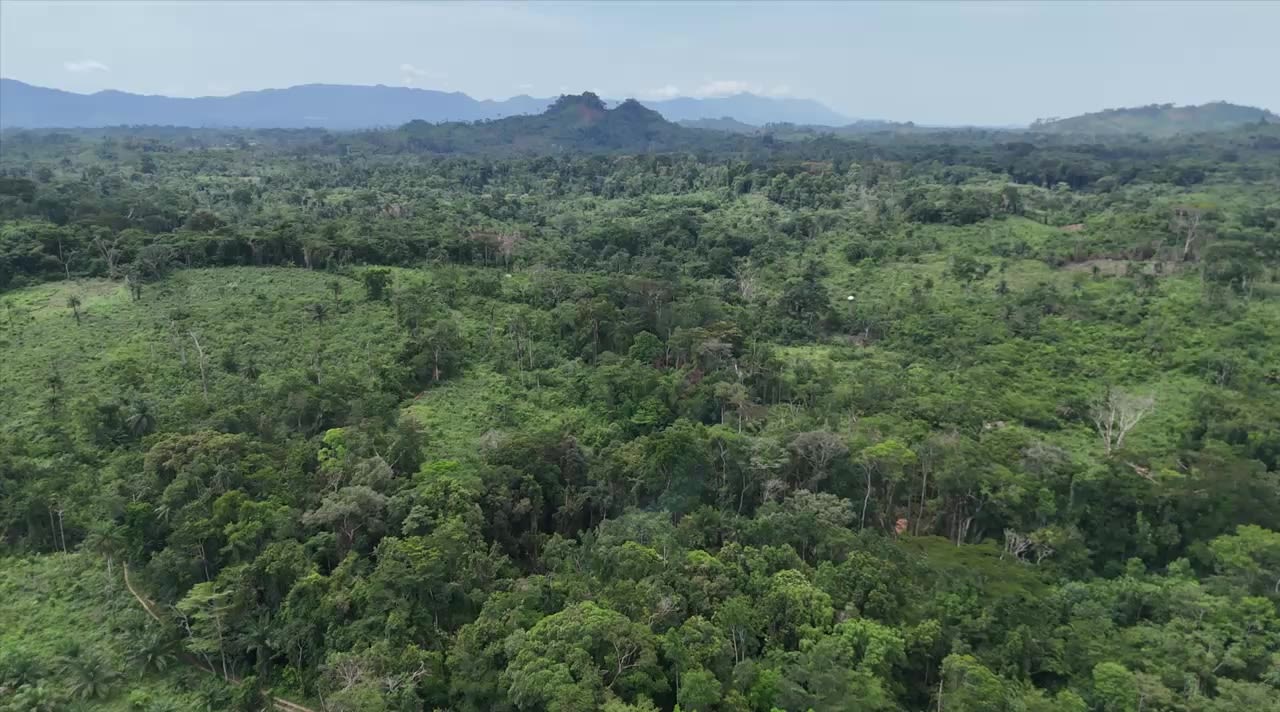
Illegal logging thrives in Liberia’s forests due to a lack of traceability and transparency. Timber from community forests and other areas can currently be harvested, moved, and sold with weak oversight, incomplete documentation, and little to no public visibility.
Deforestation and forest degradation are rampant across Liberia, and a significant amount of this forest loss and degradation is driven by illegal logging. Global Nature Watch data shows that from 2002 to 2025, Liberia lost 2.7 million hectares of tree cover. 16% of that loss was primary forest.
There are some key issues that enable widespread illegal logging in Liberia: insufficient oversight across timber supply chains, weak legal enforcement for timber sourcing, and inadequate and incomplete implementation of timber traceability systems.
The Traceability System
EIA and Code4Nature, both international nonprofit organizations, co-developed the Liberia timber traceability system in close collaboration with LICSATDUN, CS-IFM and MFGAP, and with generous financial support from EFI and the UK government.
The LC-TTS has two main components: a mobile application for registering timber transport information and roadside checks, and a public geoportal to visualize this data.
The mobile application captures key information about the timber’s journey: the time and date of registration, the GPS location, photos of the load, and the movement of the truck as it travels.
The public geoportal visualizes timber transports and makes the data accessible. Data collected on the mobile app is automatically synchronized into a centralized database and displayed on a public website geoportal for users to explore and use it.
How the system works in practice
Step 1: Register the load at the transport start
Wood owners register the timber transport with relevant information using the mobile application at the roadside loading point, once the planks or boards are placed on the truck. The mobile app captures the time and date, GPS coordinates, and photos of the timber load at origin.
Step 2: Record the route as the truck moves
The truck driver scans a digital QR code on the wood owner's mobile app, and starts driving. Along the way from the forest toward checkpoints and markets, the driver's mobile app records the GPS track. The route data can be collected and stored offline while the truck is moving. This data syncs to the server when the driver's phone connects to the internet. This process creates a geo-referenced movement record.
Step 3: Add the waybill and conduct checkpoint control
At checkpoints along the transport route, LICSATDUN agents use the mobile app to add Waybill information to the system, and both LICSATDUN and FDA agents complete control Checks using the mobile app to validate the timber load. These steps link the transport to tax payments and validate that the truck and load registered at transport origin are the same as at the checkpoint.
Step 4: End the journey at delivery
When the driver arrives at the delivery point, they use the mobile app to end the transport. This is the final step in the development of a complete digital record that includes where the transport began, where and how it moved, what documentation was added along the way, verification information from the checkpoint(s), and transport ending point.

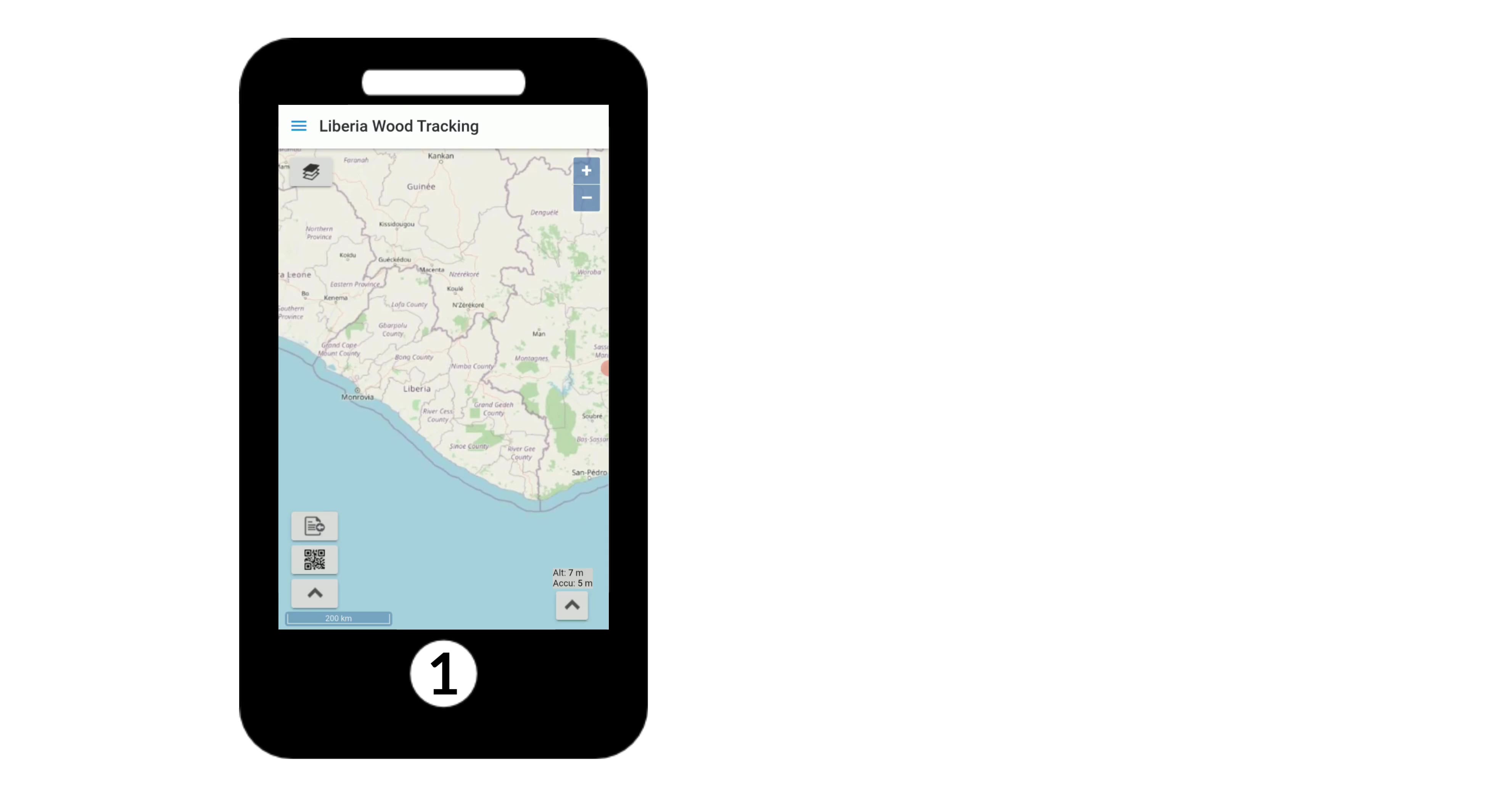


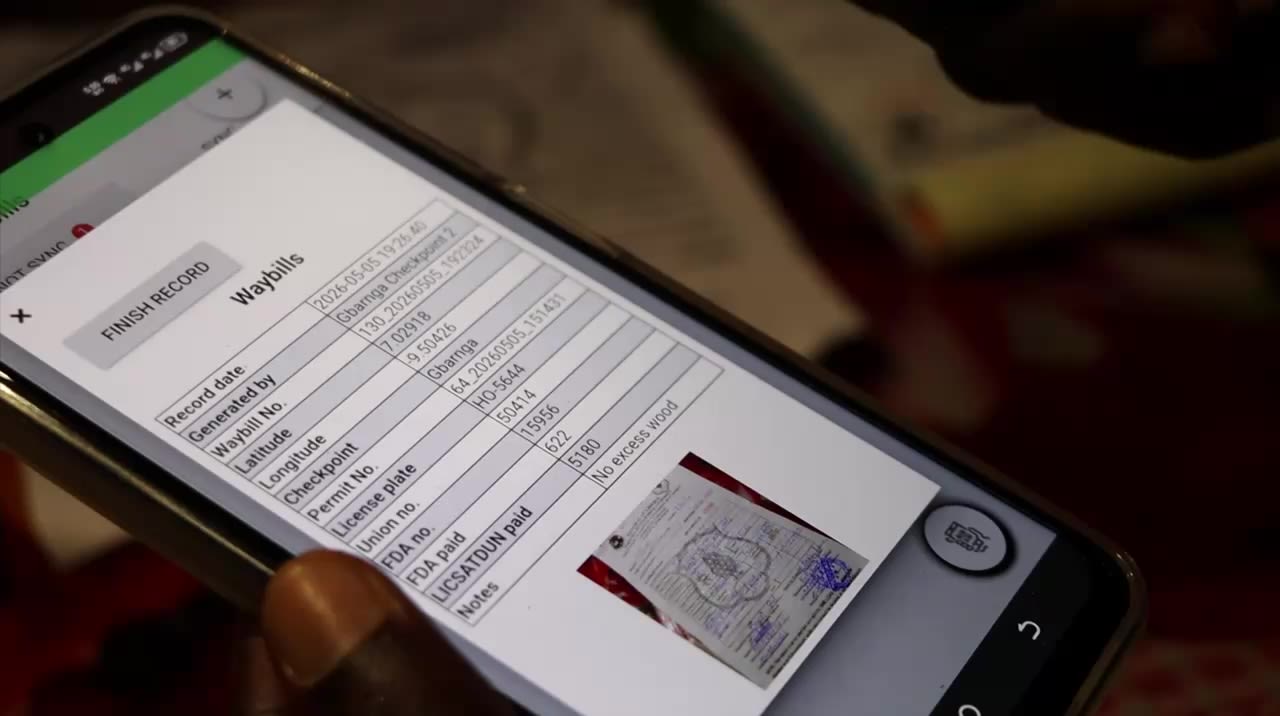
The mobile application is built around three main modules
1. Transport registration and tracking
Used at the start of the journey, this module records the timber load on the truck and creates a verifiable digital record. It captures the time and date of registration, the GPS location of origin, and photos of the load. This module provides a QR code which is scanned by the truck driver, thereby transferring the record and tracking the driver’s journey.
2. Waybill creation
At the first official checkpoint, a LICSATDUN agent uses the Waybill module to register the payment of official taxes and fees. This information is transferred to the driver via a digital QR code scan.
3. Check control
At all checkpoints, LICSATDUN and FDA agents use the Check module to verify the timber load.
These modules contribute to an application that serves as more than a registry; it is a geo-referenced transport origin record, a route log, and a checkpoint verification tool all in one.
The Geoportal
A defining element of this system is its transparency. Data collected through the mobile application feeds into an online geoportal that enables users to view timber movements on an interactive map.
With transport records, routes, and checkpoints accessible through this public interface, local communities can follow timber extracted from their forests, civil society can monitor data patterns, and government and industry actors can compare field activity with reported movement.
The geoportal is a central part of what makes this system transparent and impactful.
Why focus on chainsaw-milled timber
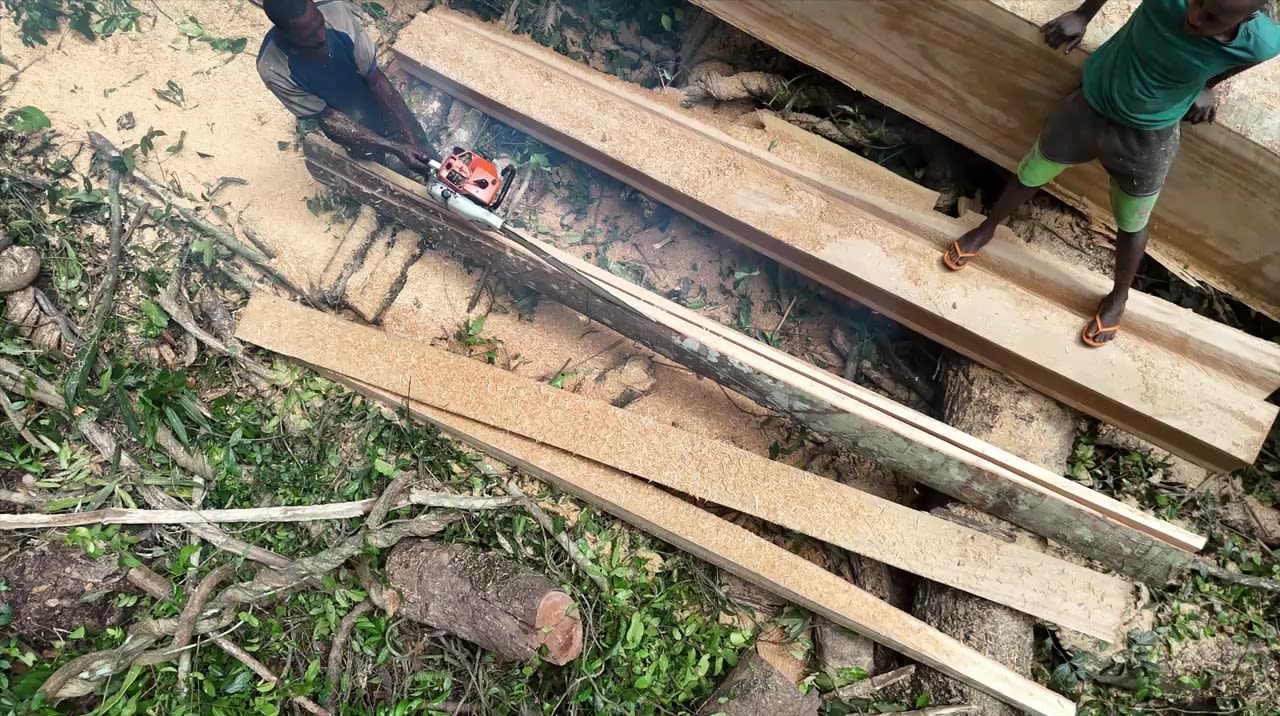
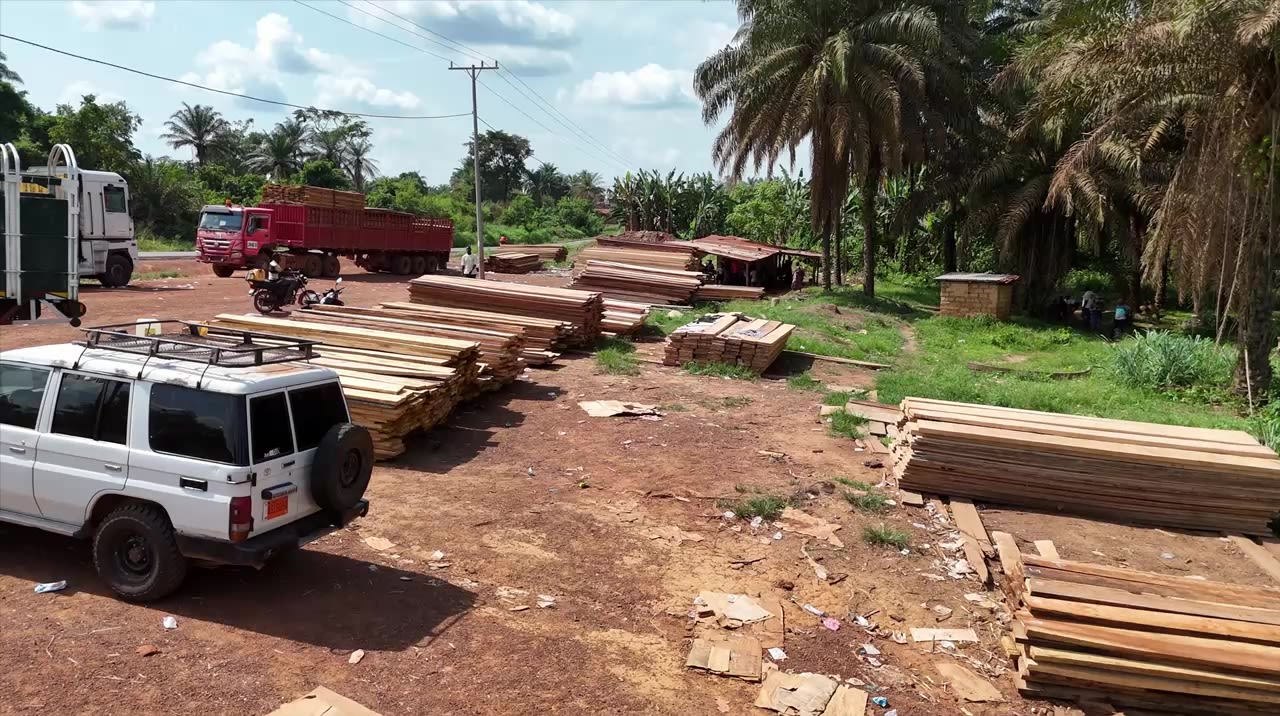
Chainsaw milling is the practice of felling a tree in a forest and using a chainsaw on site to saw the log into planks or boards. In Liberia, chainsaw milling has long been a major source of timber for the domestic market.
Building Markets described the domestic timber sector as significant but historically under-recorded, with timber from small-scale domestic operations often not tracked in official statistics and extracted without valid permits. Forest Trends notes that chainsaw milling expanded in the post-conflict period to supply reconstruction and local markets. This solidified its role in local supply chains, tying it closely to the livelihoods of many people in Liberia.
The ubiquity of chainsaw-milled timber in Liberia makes a transparent traceability system a critical tool for forest community protection. If chainsaw-milled timber is not properly registered when it is first loaded onto trucks, and if the truck's journey is not recorded, official checks later in the supply chain become much weaker.
This is complicated by the fact that this timber is often transported via roads that are difficult to monitor. Forest Trends’s work on kpokolo (rough-cut squared logs) also shows how quickly powerful actors, like big business interests, can exploit this supply chain and drive more intense forest degradation.
When implemented across Liberia, the LICSATDUN chainsaw timber traceability system will help reduce illegal logging and ensure stronger revenue collection for local communities.
Who benefits from a more transparent system?
Forest Communities
Communities gain more insight into what timber leaves their forests, when it moves, and where it goes, supporting improved revenue collection and forest governance.
Chainsaw Milling Operators
Legal operators get a clearer way to demonstrate that timber was registered, transported, and checked rather than traded through opaque or illegal channels.
Government
Checkpoint actors and regulators can access better operational information, including start-point data, transport tracks, and verifiable records, rather than just paper permits that can easily be used fraudulently.
Civil Society
Organizations gain much more high-quality data that they can use for independent monitoring and advocacy.
EIA’s broader traceability and transparency work
The Liberia Chainsaw Timber Traceability System is part of EIA’s broader work to improve traceability and transparency in forest supply chains. Working with Code4Nature and national partners, EIA has supported systems that make timber movements more visible from source to market, including in Gabon, Chile, and Romania.
Across these different contexts, the underlying logic remains the same: begin with reliable, high-quality supply chain data about timber and its movement and make this information publicly accessible for external verification and visibility.
Click here to learn more about EIA's efforts to combat environmental crime and improve forest governance around the world.
This document has been produced with the financial assistance of the United Kingdom. The views expressed herein can in no way be taken to reflect the official opinion of the United Kingdom. The work was commissioned by the European Forest Institute, which is funded by the United Kingdom and EFI.
 Built with Shorthand